
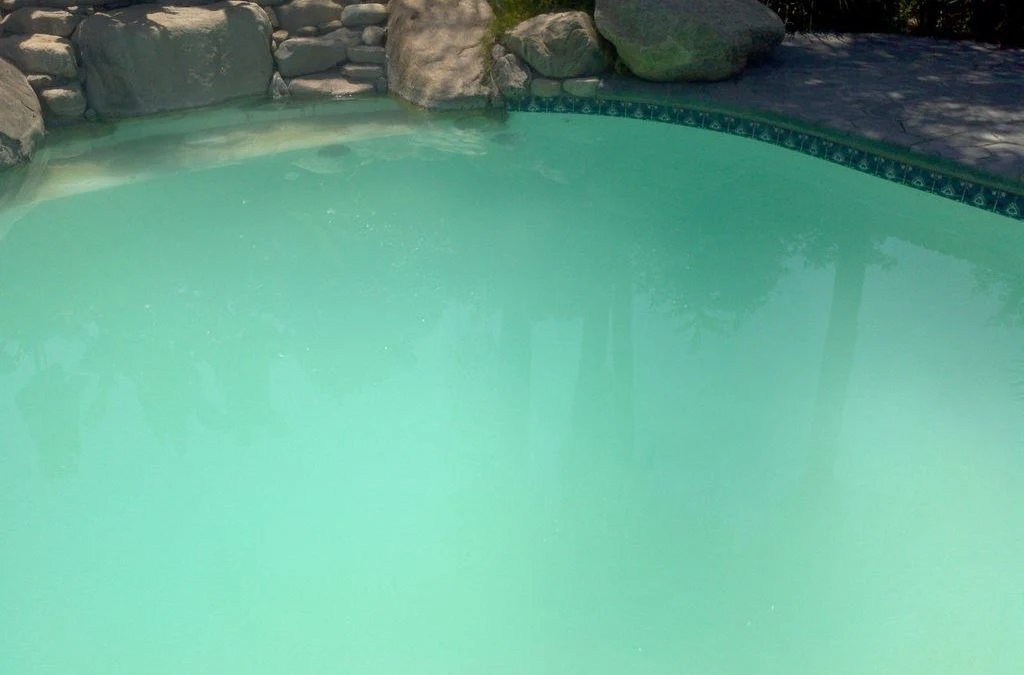
If your pool looks white, hazy, or “milky” instead of clear and blue, it’s a sign that something in your water balance or filtration system isn’t working properly.
Milky pool water is common during hot weather and periods of heavy use, but it shouldn’t be ignored; it can indicate underlying issues that will only worsen if left untreated.
Here’s what milky pool water means, what causes it, and how to fix it properly.
What Is Milky Pool Water?
Milky pool water appears cloudy or white rather than transparent. You may still be able to see the bottom of the pool, but the water lacks clarity and looks dull or chalky instead of sparkling.
This condition usually means:
- Tiny particles are suspended in the water
- Your filtration system isn’t removing them effectively
- Your chemical balance is off
While it might not always be unsafe, it is a warning sign that your pool is no longer properly balanced or filtered.
Common Causes of Milky Pool Water
1. Poor Filtration
If your filter is clogged, worn out, or undersized for your pool, it won’t trap fine debris effectively. These particles remain suspended in the water, giving it a cloudy or milky appearance.
Common filtration issues include:
-
Dirty or blocked filter media
-
Old cartridge or sand that needs replacing
-
Inadequate run time
-
Faulty pump circulation
2. Chemical Imbalance
Incorrect chemical levels are one of the most common causes of milky water. In particular:
-
High pH reduces chlorine effectiveness
-
Low chlorine allows contaminants to build up
-
High calcium hardness can cause scaling
-
High total alkalinity can make water appear cloudy
Even if you’ve added chemicals recently, incorrect dosing or poor mixing can still cause cloudiness.
3. Calcium Hardness Problems
When calcium levels are too high, minerals can fall out of solution and remain suspended in the water, creating a milky or chalky look. This often happens when:
-
Water evaporates rapidly in hot weather
-
Top-ups increase mineral concentration
-
pH and alkalinity are not balanced
This can also lead to scale forming on pool surfaces and equipment.
4. Dead Algae After Treatment
If you recently treated green or algae-affected water, the algae may now be dead but still floating in the pool. These microscopic particles make the water appear milky or grey rather than green.
Without proper filtration and vacuuming, the dead algae will remain suspended instead of being removed.
5. Heavy Pool Use
Large numbers of swimmers introduce more sunscreen, sweat, body oils, and dirt.
All of these contribute to increased organic load in the water. During busy summer periods, this can overwhelm your filtration and sanitising system.
Is Milky Pool Water Safe to Swim In?
Not always. Milky water can indicate:
-
Ineffective sanitisation
-
High bacterial load
-
Poor water balance
If you cannot clearly see the pool floor or drain covers, swimming is not recommended. Cloudy water can hide hazards and may cause eye or skin irritation.
It’s best to resolve the issue before using the pool again.
How to Fix Milky Pool Water
Step 1: Test Your Water
As a first step, ensure you check:
-
Free chlorine
-
pH
-
Total alkalinity
-
Calcium hardness
Many cases of milky water are caused by one or more of these being out of range.
Step 2: Adjust Chemical Levels
General targets:
-
Chlorine: 1–3 ppm
-
pH: 7.2–7.6
-
Total alkalinity: 80–120 ppm
-
Calcium hardness: 200–400 ppm
Correcting these levels often clears mild cloudiness within 24–48 hours.
Step 3: Clean or Backwash Your Filter
A dirty filter cannot trap fine particles. Depending on your system:
-
Backwash sand or DE filters
-
Hose out cartridge filters
-
Inspect for worn or damaged media
If your filter media is old, replacement may be required.
Step 4: Run Your Pump Longer
Short run times reduce filtration efficiency. During hot weather or heavy use, longer run cycles help remove suspended debris and improve clarity.
Step 5: Remove Fine Particles
If cloudiness persists:
-
Use a pool clarifier (for mild cloudiness)
-
Use a flocculant (for severe cloudiness)
These products bind fine particles together so they can be filtered or vacuumed out.
How to Prevent Milky Pool Water
Prevention is far easier (and cheaper) than recovery. Good habits include:
-
Weekly water testing
-
Regular filter cleaning
-
Correct pump run times
-
Not overdosing on chemicals
-
Professional servicing at seasonal intervals
Balanced water and efficient filtration keep particles from building up in the first place.